
Thirty years on, Illmatic still gets cited whenever critics or producers need a fixed point for what rap can achieve at its best. Released in April 1994, Nas’ debut has earned a reputation that few albums in any genre can match. This article tests that reputation honestly, examining the New York scene that shaped it, the craft behind its 39 minutes, and the documented evidence that its influence has never really stopped compounding.
Why Illmatic Arrived at Exactly the Right Moment
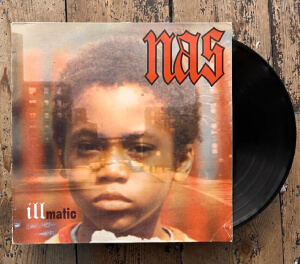
By 1994, New York rap was pulling in two directions. The art was sophisticated – producers like Pete Rock and DJ Premier were redefining what beats could do – but commercial pressures were pushing labels toward safer, radio-friendly releases. Nas had already signaled something different. His sixteen bars on Main Source’s “Live at the Barbeque” in 1991 stopped listeners cold, and his contribution to the Zebrahead soundtrack with “Halftime” confirmed he wasn’t a fluke.
Columbia Records recently dropped an ambitious debut, uniting DJ Premier, Pete Rock, Q-Tip, and Large Professor for a single project-this represented a highly unusual count of talent for a new artist.
Aware of the recording’s inauguration, Illmatic unveiled at a huge number twelve on the Billboard 200, which was nothing less than solid and unimpressive. Untested to this day was the classic status to which it travels. That was hewn out over the years, with listens and time. Input from both inside and outside the entire critical labyrinth relates Illmatic to warrant rank in the best albums during the entire history of rap.
The Album Sounds Like a Classic Because Every Detail Is Controlled
Thirty-nine minutes were all Nas needed. The short runtime of the album means that every one of the tracks is heavy on the content, and wastefulness cannot be an option.
It might be termed the who’s-who of early-’90s New York as DJ Premier, Pete Rock, Large Professor, Q-Tip, and L. E. S. each contributed an individual flavor to the whole without reproducing fragments. Some resident producer rhythms of thug life at their incipience link with relaxed Bronx one (Q-Tip’s jazzy “One Love”) to the cracked-open grandeur of a fast-dying somewhere else (L. E. S.’ “Life’s a Bitch”). “N. Y. State of Mind” opens with Premier’s claustrophobic loop and Nas painting Queensbridge with the precision of a crime novelist. “The World Is Yours” shifts into something more reflective, Pete Rock’s soul sample breathing space into the record.
Critic Robert Christgau described Nas’ writing as “novelistic,” and there’s no denying the range. “One Love” runs nearly five minutes – an epistolary letter to a friend in prison – without losing momentum.
Cohesion at this level, across five producers, remains genuinely rare.
Its Legacy Is Measured by Influence, Not Just Reputation
Critical canonization came slowly, then all at once. Rolling Stone placed Illmatic among the greatest albums ever recorded. The Source gave it a rare five-mic rating. By the album’s tenth anniversary in 2004, Columbia Records reissued it with bonus material, treating it less like a catalog release and more like a document requiring preservation.
Jay-Z has cited Nas as the benchmark for lyrical craft. Kendrick Lamar has spoken openly about studying Illmatic’s construction. That kind of generational reach is rare.
Commercially, the album sold modestly on release. It peaked at number 12 on the Billboard 200. Yet labels began using it as proof that a debut could prioritize artistic integrity over radio play and still build a permanent audience. That argument shaped how serious New York rap got marketed through the late 1990s and beyond.
Illmatic Is Still the Standard by Which Classics Are Judged
Illmatic was released just when it was supposed to, in April 1994. Correctly capturing a specific reality of the New York it was situated in, this work has hardly felt a dent in consensus opinion since its release. Illmatic sonically provided a debut that few have even come close to matching-due to, among others, the likes of premieres by Q-Tip, Pete Rock and DJ Premier. Critics, colleagues, and MCs from later generations always re-produce these nine songs at the yardstick for rap: what can be accomplished by vision and execution, the grandest conception and execution. Although it is not only true that there are many classics which have enjoyed a long life, Illmatic accords well in every domain that does matter to any such classification. Musically though, this is not just the high point in Nas’ catalog but the yardstick for superb hip-hop endeavors.
